





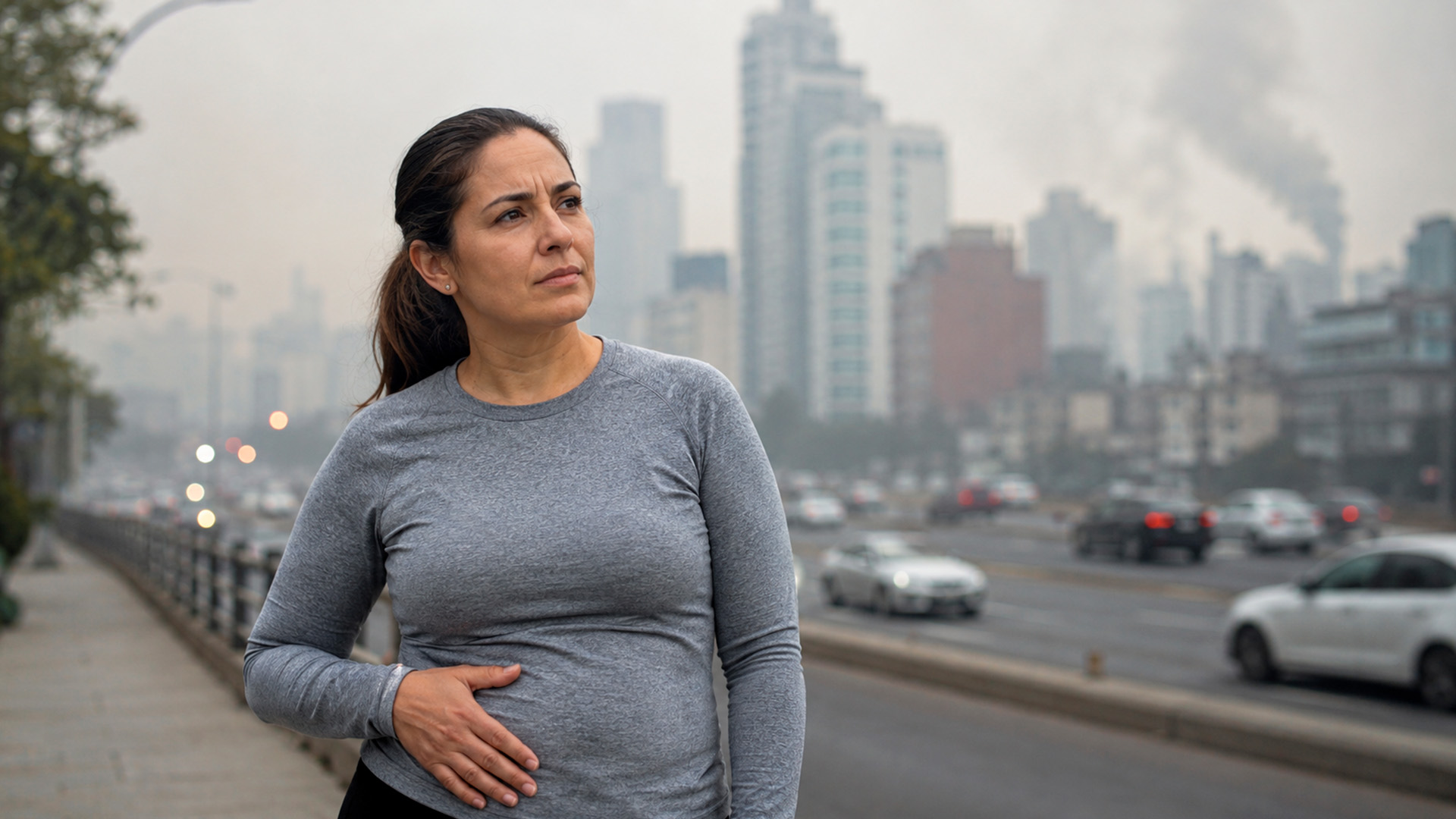
A new study published in the journal Diabetes Care reveals that long-term exposure to air pollution may contribute to increased total body fat and reduced lean body mass in older adults with overweight, obesity, and metabolic syndrome.
Specifically, the findings show that higher levels of air pollution were associated with greater increases in total body fat mass and greater losses of lean mass over both one-year and three-year follow-up periods. According to the researchers, these changes in body composition are especially important because fat accumulation and loss of lean mass are closely linked to increased cardiometabolic risk, particularly in individuals with excess weight.
Spanish Research
The research, led by investigators from the Instituto de Investigación Sanitaria Illes Balears and the CIBEROBN area of Physiopathology of Obesity and Nutrition, in collaboration with researchers from the CIBERDEM and CIBERESP areas and other national and international centers, analyzed data from 1,454 participants in the PREDIMED-Plus trial. This is a pioneering multicenter cardiovascular prevention study in Spain, funded with more than 15 million euros through different funding calls, mainly supported by ISCIII and the CIBER Consortium.
The team evaluated residential exposure to atmospheric pollutants such as black carbon, fine particulate matter (PM2.5), and nitrogen dioxide (NO2), and related it to detailed body composition measurements obtained through bone densitometry, also known as DEXA or DXA scanning (dual-energy X-ray absorptiometry). Participants mainly came from five Spanish cities — Pamplona, León, Palma, Reus, and Barcelona — with Barcelona presenting the highest concentrations of the three atmospheric pollutants.
Pollution and body fat
Ariadna Curto, PhD, first author of the study, stated:
“Black carbon, a clear marker of urban traffic, was the pollutant with the greatest impact: living in areas with higher levels was associated with a loss of nearly one kilogram of lean mass over three years, highlighting the importance of considering air pollution as an environmental factor that may influence metabolic health.”
Dora Romaguera, senior author of the study, added:
“Our study is also one of the first to analyze this association for visceral fat, the fat that accumulates in the abdominal cavity. The effect was only evident in participants under 65 years of age, suggesting that pollutants may favor greater visceral fat accumulation in younger adults, whose adipose tissue still has the capacity to expand.”
The authors call for future longitudinal studies that more precisely evaluate the role of visceral fat accumulation and lean mass loss in metabolically vulnerable populations such as the one studied. The study also reinforces the need for public policies that reduce exposure to air pollutants and promote healthier environments, especially in urban areas where pollution levels tend to be higher.
SOURCE: Medscape.com