





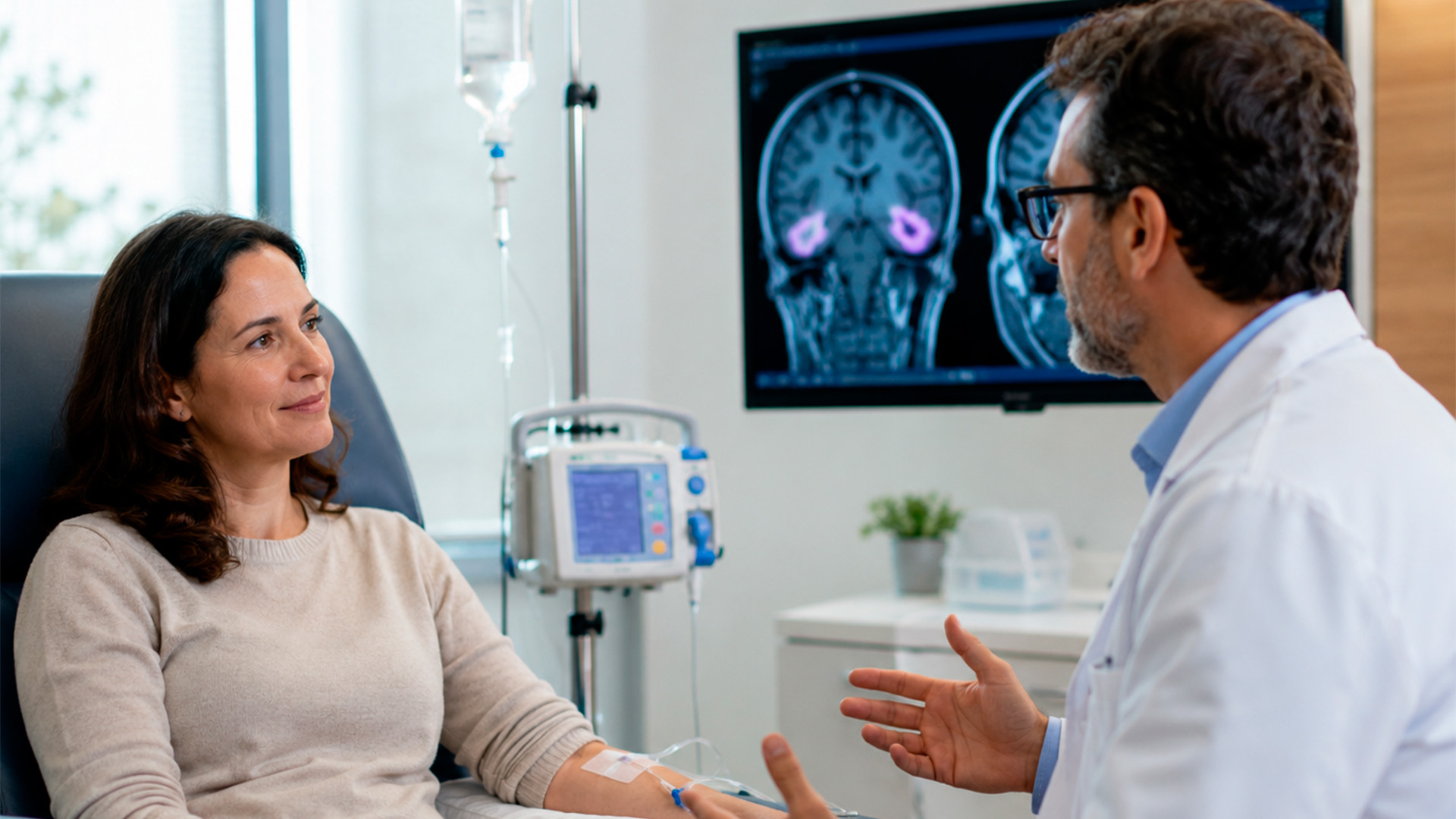
A single dose of a new cell-based therapy has shown promising results in controlling seizures for months in patients with drug-resistant bilateral mesial temporal lobe epilepsy, according to preliminary findings from an ongoing phase 1/2 clinical trial.
Researchers believe this approach could become a future treatment option for patients who are not candidates for traditional surgical interventions.
The results were presented at the 2026 Annual Meeting of the American Academy of Neurology.
A Different Way of Treating Epilepsy
According to Dr. Peter C. Warnke — professor of neurosurgery, neurology, and pediatrics at the University of Chicago — this therapy is unique because it targets the biological mechanisms underlying epilepsy itself.
Unlike conventional treatments, it:
- Does not destroy brain tissue
- Does not require implanted devices
- Produces relatively few side effects
- Focuses on restoring balance in brain activity
Dr. Warnke described the early results as “very promising.”
Understanding the Problem
Around 80% of temporal lobe epilepsy cases involve drug-resistant bilateral mesial temporal lobe epilepsy, a condition that usually originates in the hippocampus.
For these patients, surgery is often not possible.
Removing both hippocampi can cause severe cognitive damage, meaning many patients are left with limited treatment options such as electrical stimulation devices that reduce — but rarely eliminate — seizures.
Restoring the Brain’s Balance
The new therapy is based on a central concept in epilepsy research:
Seizures occur when the delicate balance between excitatory and inhibitory brain signals becomes disrupted.
The therapy aims to restore that balance.
Researchers developed a treatment called NRTX-1001, which uses specialized inhibitory brain cells known as GABAergic interneurons.
These cells:
- Are derived from human stem cells
- Mature into functional inhibitory neurons
- Produce GABA, an important neurotransmitter that helps calm excessive brain activity
The goal is to implant these cells directly into the hippocampus to reduce abnormal electrical activity and prevent seizures.
A One-Time Treatment
The ongoing phase 1/2 trial included eight young adults with severe drug-resistant epilepsy.
Most participants had hippocampal sclerosis, a known cause of epilepsy.
Using image-guided surgery, doctors injected a single dose of NRTX-1001 cells directly into the seizure-generating regions of the hippocampus.
Patients also received temporary immunosuppressive therapy to help the transplanted cells survive.
Importantly:
- The treatment requires only one injection
- MRI scans confirmed accurate placement
- Animal studies suggest transplanted cells may survive long term
Early Results
The preliminary outcomes showed encouraging seizure reductions:
- A 64% average reduction in disabling seizures after 4–6 months
- A 65% average reduction after 7–9 months
Additionally:
- 50% of patients achieved at least a 50% reduction in seizures
- One patient became completely seizure-free for more than 12 months
Researchers also reported improvements in quality-of-life scores without signs of cognitive decline.
Side Effects
The most commonly reported side effects included:
- Nausea
- Fatigue
- Headache
- Throat pain
Most were mild to moderate and appeared related to immunosuppressive medications rather than the therapy itself.
Two serious adverse events occurred, but investigators stated they were unrelated to the treatment.
Why This Matters
This therapy represents one of the first attempts to treat epilepsy by biologically restoring inhibitory brain function rather than suppressing symptoms alone.
Experts say the approach is highly innovative.
Dr. Sasha Alick-Lindstrom from the University of Texas Southwestern Medical Center described the findings as “very encouraging,” while also emphasizing the need for larger studies.
What Comes Next
Researchers are now preparing for a larger phase III randomized clinical trial, pending approval from the U.S. Food and Drug Administration.
If future studies confirm these early findings, therapies like NRTX-1001 could potentially transform treatment options for patients living with severe, drug-resistant epilepsy.
The study is supported by Neurona Therapeutics.
FUENTE: MEDSCAPE.COM